Introduction
Moving multi-ton steel coils, automotive assemblies, or bulk aggregates creates extraordinary operational risks. A single material handling failure can result in worker injuries, equipment damage exceeding $500,000, and production shutdowns lasting days.
Industries like metals processing, automotive manufacturing, mining, and building materials need specialized controls integration that handles massive inertia, precision positioning, and robust safety systems protecting workers around potentially catastrophic equipment.
The right automation integrator transforms these operations through:
- Predictive maintenance reducing unplanned downtime by 30-50%
- Advanced interlock systems preventing safety incidents
- Intelligent material flow control optimizing throughput
- Heavy-duty application expertise delivering measurable ROI
Choosing a partner with deep heavy material handling experience (not general warehouse automation) makes the difference between a system that merely functions and one that cuts labor costs, eliminates safety incidents, and increases capacity.
TLDR
- Choosing the right integrator reduces downtime by 30-40% and cuts commissioning time in half
- Prioritize certifications (Rockwell, Siemens), PE licensing, and proven heavy-industry experience
- Top 7 include global leaders (Daifuku, Dematic) and specialized regional players (Lashley Cohen and Associates)
- Seek end-to-end partners: design, programming, installation, commissioning, and ongoing support
Overview of Industrial Automation Integrators in Heavy Material Handling
Industrial automation integrators differ fundamentally from equipment suppliers. While OEMs manufacture specific hardware—conveyors, cranes, robots—integrators design and implement control systems that tie together equipment from multiple vendors.
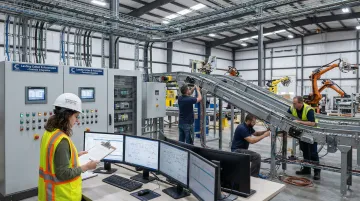
They program PLCs, configure SCADA systems, integrate safety circuits, and ensure all components communicate reliably from the plant floor to enterprise systems.
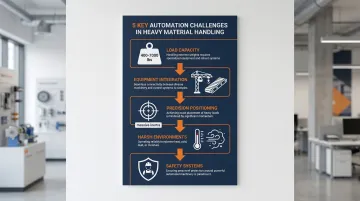
Heavy material handling presents unique automation challenges:
- Load capacities ranging from 400 lbs to over 7,000 lbs
- Integration with overhead cranes and heavy-duty conveyors
- Precise positioning of massive loads with significant inertia
- Ruggedized components for harsh environments (extreme temperatures, dust, vibration)
- Comprehensive safety systems protecting workers around dangerous equipment
The companies below represent leading integrators serving heavy material handling sectors. We selected them based on controls platform expertise, industry-specific experience, safety system capabilities, and documented project success in demanding industrial environments.
Top 7 Industrial Automation Integrators for Heavy Material Handling
We selected these integrators for their controls engineering expertise, proven heavy-industry project experience, safety system design capabilities, and successful implementations in demanding environments like metals, automotive, and building materials manufacturing.
Daifuku Co., Ltd.
Founded in 1937, Daifuku is the world's largest material handling systems supplier with extensive automotive and heavy manufacturing experience.
The company delivered Japan's first passenger automobile factory conveyor system in 1959 and has maintained leadership in automotive production automation ever since.
Differentiators:
- Comprehensive AS/RS solutions engineered for heavy loads with precision positioning
- Proven automotive industry expertise across all production processes (press, weld, paint, assembly)
- Global scale with local support through one-stop service structure
- Integrated software platforms managing complex multi-process operations
| Specialization | Heavy-duty AS/RS, automotive assembly automation, cleanroom systems |
|---|---|
| Key Industries | Automotive, aerospace, semiconductor, heavy manufacturing |
| Notable Capability | Handles loads up to 30 tons with precision positioning systems |
Dematic (KION Group)
Founded in 1819 and acquired by KION Group in 2016, Dematic combines centuries of material handling experience with modern internal logistics technology.
Their strength lies in comprehensive automation solutions spanning distribution and heavy manufacturing applications.
Differentiators:
- Modular system design enabling scalable solutions from single lines to full facilities
- Extensive conveyor and sortation expertise with heavy-duty capabilities
- Strong software integration connecting WMS, WCS, and equipment controls
- AGV solutions for oversized/custom material handling in automotive and heavy equipment sectors
| Specialization | Conveyor systems, AGV/AMR integration, warehouse control systems |
|---|---|
| Key Industries | Metals, building materials, automotive, general manufacturing |
| Notable Capability | Multishuttle systems capable of handling pallets up to 3,000 lbs |
Honeywell Intelligrated
Acquired by Honeywell in 2016 for $1.5 billion, Intelligrated integrates material handling automation with Honeywell's broader industrial control systems expertise. This combination creates unique capabilities in intelligent, connected automation for heavy-duty applications.
Key strengths:
- Advanced software analytics and predictive maintenance capabilities
- Integration with Honeywell building and process control systems for facility-wide optimization
- Expertise in complex material flow optimization using real-time data
- Connected distribution center approach leveraging Honeywell's sensing and software portfolio
| Specialization | Intelligent conveyors, robotic palletizing, Momentum WCS software |
|---|---|
| Key Industries | Consumer goods, food & beverage, building materials, 3PL |
| Notable Capability | Real-time optimization algorithms for high-throughput operations |
SSI Schaefer Group
Founded in 1937 and remaining family-owned, SSI Schaefer brings German engineering heritage to comprehensive solutions spanning storage systems, automation, and proprietary WAMAS software. Their expertise in heavy-duty applications serves demanding sectors like automotive and pulp & paper.
What sets them apart:
- ISO-9001 certified processes ensuring consistent quality
- Heavy-duty racking and storage expertise designed for extreme loads
- Robust shuttle systems engineered for harsh industrial environments
- Global service network with local engineering support
| Specialization | Heavy-duty storage systems, shuttle technology, warehouse software |
|---|---|
| Key Industries | Metals, automotive, paper/printing, general manufacturing |
| Notable Capability | Satellite shuttle systems designed for loads up to 3,300 lbs in extreme temperatures |
Bastian Solutions (Toyota Advanced Logistics)
Bastian Solutions began in 1952. Toyota Industries Corporation acquired them in 2017, bringing Toyota Production System principles to automation integration.
This connection emphasizes continuous improvement, lean manufacturing, and scalable solutions.
Differentiators:
- Lean manufacturing expertise applied to automation design
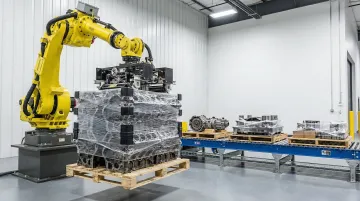
- Comprehensive robotics integration (palletizing, picking, depalletizing, machine tending)
- Custom controls engineering for unique heavy-load applications
- Unit Load AS/RS systems handling 400 to 7,000+ lbs
| Specialization | Robotic palletizing, conveyor systems, custom automation solutions |
|---|---|
| Key Industries | Food & beverage, consumer goods, automotive, building materials |
| Notable Capability | Custom robotic cells for handling irregular heavy loads and mixed SKUs; achieved 48% defect reduction for DENSO |
FORTNA
Merged with MHS Global in November 2022, FORTNA focuses on optimizing distribution and manufacturing operations through intelligent automation design. Their consulting-first approach emphasizes data-driven design and simulation before implementation.
Differentiators:
- Data-driven design methodology validating solutions before construction
- Simulation and digital twin capabilities predicting throughput and identifying bottlenecks
- Comprehensive software suite (FortnaWES, FortnaWCS) managing complex operations
- Expertise in brownfield integration projects working with existing infrastructure
| Specialization | Consulting, system design, software solutions, complex integrations |
|---|---|
| Key Industries | Retail, consumer goods, manufacturing, 3PL, industrial distribution |
| Notable Capability | Advanced simulation modeling to validate throughput before construction; achieved 30% productivity improvement for heavy-duty distributor |
Lashley Cohen and Associates
With 35+ years serving heavy material handling industries since 1988, Lashley Cohen and Associates specializes in controls integration for metals, building materials, and manufacturing sectors. The company maintains ISO-9001 certification and employs certified PE engineers, providing enterprise-level capabilities with responsive, personalized service.
Differentiators:
- Rockwell Automation Bronze Partner with deep Allen-Bradley PLC expertise
- PE-stamped engineering for compliance-critical projects requiring professional licensure
- Specialized experience in metals processing, building materials, and heavy manufacturing
- Mid-market focus delivering enterprise capabilities with responsive service and long-term client relationships
| Specialization | Controls integration, PLC programming, SCADA systems, project management |
|---|---|
| Key Industries | Metals, building materials, automotive, food & beverage, chemicals |
| Notable Capability | PE-certified engineering staff for projects requiring professional licensure and regulatory compliance; experience with material handling systems moving 80-foot railroad track sections |
How We Chose the Best Integrators
Choosing the right automation integrator for heavy material handling means evaluating technical expertise and industry-specific experience—not just company size or lowest bid.
Common mistakes include selecting partners based on general warehouse automation capabilities without verifying experience with heavy loads, harsh environments, and safety-critical applications. Another pitfall is failing to confirm controls platform expertise matches your existing or planned infrastructure, leading to integration challenges.
Key evaluation factors:
- Industry-specific project experience: Documented success in metals, automotive, building materials, or similar heavy-duty applications
- Controls platform certifications: Rockwell, Siemens, or other platform partnerships demonstrating technical expertise
- Engineering credentials: PE licensing for projects requiring stamped drawings, ISO-9001 certification for quality management, CSIA membership indicating commitment to best practices
- Safety system design capabilities: Experience with heavy equipment interlocks, load monitoring, and compliance with OSHA and industry standards
- References from similar applications: Verified project outcomes in comparable environments
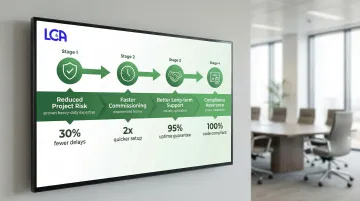
These factors translate into concrete business outcomes:
- Reduced project risk through proven expertise in heavy-duty applications
- Faster commissioning with experienced teams familiar with high-load challenges
- Better long-term support from specialists who understand your industry requirements
- Compliance assurance through proper engineering credentials, preventing costly delays or safety incidents
Conclusion
Choosing an automation integrator for heavy material handling demands careful evaluation of technical expertise, industry-specific experience, and engineering credentials—not just company size or equipment catalog breadth. The global automated material handling equipment market is projected to reach $76.3 billion by 2026, reflecting growing adoption across heavy industries seeking safety improvements, labor efficiency, and capacity optimization.
When evaluating potential partners, prioritize integrators who demonstrate:
- Proven experience in your specific sector (metals, automotive, building materials)
- Engineering certifications that meet your requirements (PE licensing, ISO-9001, CSIA membership)
- Controls platform expertise matching your existing or planned infrastructure
- Documented success with heavy loads, harsh environments, and safety-critical applications
Verify their qualifications through references and detailed case studies.
These criteria define the foundation of effective partnership.
For over 35 years, Lashley Cohen and Associates has delivered controls integration and automation solutions to heavy material handling industries. With ISO-9001 certification, Certified PE Engineers on staff, and deep expertise in metals, building materials, and manufacturing sectors, we combine technical depth with hands-on project management. Our experience includes material handling systems for railroad track recycling, major metal service centers, and building materials manufacturers—backed by over 5,000 successful projects since 1988. Contact us at (770) 962-0878 or websales@lashleycohen.com to discuss how we can optimize your material handling operations.
Frequently Asked Questions
What is the difference between an industrial automation integrator and an equipment supplier?
Equipment suppliers manufacture hardware components like conveyors, robots, and cranes. Integrators design the control systems that tie all equipment together—programming PLCs and HMIs, integrating safety systems, and connecting plant floor equipment to enterprise systems (MES, ERP) regardless of manufacturer.
How long does it typically take to implement an automation solution for heavy material handling?
Typical implementations range from 3-6 months for single-line automation to 12-18 months for full facility integration. Design and engineering consume 25-30% of the timeline, with commissioning and testing requiring 15-20%. Brownfield projects integrating with existing equipment often proceed faster than greenfield installations.
What certifications should I look for when choosing an automation integrator?
Look for ISO-9001 for quality management, controls platform certifications (Rockwell Automation partner, Siemens Solution Partner), Professional Engineer (PE) licensing for stamped drawings, and CSIA membership indicating adherence to best practices in project management and system development.
Can automation systems be integrated with existing legacy equipment in heavy manufacturing?
Yes, experienced integrators specialize in brownfield projects using protocol conversion, retrofit control panels, and phased implementation to maintain production during upgrades. Compatibility assessments and middleware solutions address integration challenges between new and legacy systems.
What ROI can I expect from automating heavy material handling processes?
Typical ROI ranges from 18-36 months. Primary benefits include 15-30% labor cost reduction, 20-40% throughput improvement, 50-70% reduction in safety incidents, and 10-20% decrease in product damage. One heavy-duty distributor achieved 30% productivity improvement with automation.
How do I determine if my facility is ready for automation?
Key indicators include repetitive material movement patterns, safety concerns with manual heavy-load handling, labor shortages for physically demanding tasks, quality issues from manual processes, and capacity constraints. Most integrators offer feasibility studies with ROI projections and implementation roadmaps before requiring commitment.