Introduction: The Evolution of Industrial Production
Manufacturing is undergoing a profound transformation. The shift from manual operations to advanced automated systems has become essential for survival in an increasingly competitive global market.
US manufacturers face critical challenges driving this transformation. Nearly 500,000 manufacturing positions remain unfilled nationwide, with projections indicating a shortfall of 2.1 million jobs by 2030.
Beyond the labor crisis, manufacturers struggle with quality inconsistency, production bottlenecks, and workplace safety concerns that manual processes cannot adequately address.
Factory automation offers a solution. By integrating control systems, software, robotics, and machinery to minimize human intervention, manufacturers are achieving dramatic improvements in productivity, quality, and safety while addressing workforce gaps.
This article explores:
- What factory automation is and why manufacturers are embracing it
- Different types of automation systems and key enabling technologies
- Implementation considerations and real-world applications across industries
TLDR: Factory Automation at a Glance
- Integrates control systems and machinery to minimize human intervention while maximizing efficiency and quality
- Delivers 40-50% productivity gains and up to 70% defect reduction
- Choose from four automation levels based on production volume and flexibility needs
- Requires strategic planning and experienced integration partners
- Applied across food & beverage, automotive, chemicals, and manufacturing sectors
What is Factory Automation?
Definition and Core Concept
Factory automation integrates control systems, software, robotics, and machinery to automate manufacturing processes with minimal human intervention.
This technology-driven approach enhances precision, efficiency, and control throughout production operations.
Automation exists on a spectrum. Partial automation handles specific tasks like robotic welding on an assembly line, while full automation manages entire production processes from raw material handling through finished product packaging.
The goal isn't to eliminate human workers but to enhance their capabilities and shift them to higher-value activities.
Factory automation specifically targets manufacturing production processes within industrial facilities. This differs from broader concepts like industrial automation (which includes utilities and infrastructure) and Industry 4.0 (which emphasizes connectivity and data analytics).
Key Components of Modern Factory Automation Systems
Understanding how automation works requires looking at the core components. Modern factory automation relies on interconnected parts working as a unified system:
- Sensors detect physical conditions (temperature, pressure, proximity) and convert them to electrical signals
- Actuators execute physical actions based on control signals (opening valves, moving robotic arms)
- PLCs (Programmable Logic Controllers) function as the system brain, executing high-speed control tasks like logic, timing, and sequencing
- HMIs (Human-Machine Interfaces) give operators visual control to monitor and manage systems
- SCADA systems enable supervisory control and data acquisition across multiple locations
- Industrial networks enable communication between all components using protocols like PROFINET and OPC UA
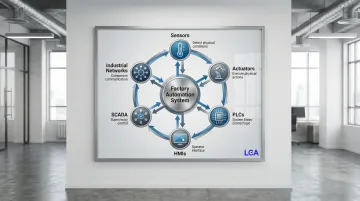
These components only deliver results when properly integrated. Controls integration ensures everything communicates effectively, creating cohesive automated operations. Without this integration, even sophisticated individual components underperform.
Why Manufacturers Are Embracing Automation
Addressing Labor Challenges and Skill Gaps
The manufacturing workforce crisis is accelerating automation adoption. With nearly 500,000 open positions and a projected 2.1 million unfilled jobs by 2030, manufacturers face an urgent challenge.
Maintaining production capacity despite labor shortages has become a critical priority.
Automation addresses this challenge by handling repetitive, physically demanding tasks that are increasingly difficult to staff. Rather than replacing workers, 85% of manufacturers are prioritizing digital transformation to shift workforce demand toward technicians and digitally fluent workers who manage automated systems.
Achieving Consistent Quality and Precision
Beyond solving workforce challenges, automation delivers another powerful advantage: eliminating quality variability. Manual processes inherently introduce inconsistency through human fatigue, distraction, and varying technique.
High-automation automotive plants achieve defect reduction rates of up to 70% compared to facilities with manual processes.
Robotic systems deliver identical precision on every cycle, ensuring consistent product quality regardless of shift, season, or production volume.
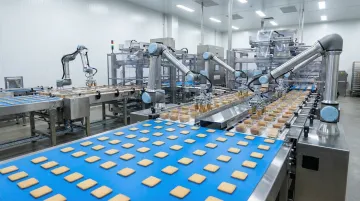
The quality benefits translate directly to cost savings. In food manufacturing, one waffle cookie manufacturer implementing automated production lines expects to decrease material waste by over $50 per batch while increasing production from 1,200 to 4,000 cookies per hour.
Improving Operational Efficiency and Throughput
Automated systems operate continuously without breaks, delivering 24/7 production capabilities that maximize equipment utilization. A metal fabricator reduced production time for a curved stainless-steel part from 3 hours to just 15 minutes—a 95% reduction—by implementing a collaborative robot welding solution.
The productivity gains extend beyond raw speed:
- Reduced changeover times between production runs
- Minimized material handling delays
- Eliminated bottlenecks that constrain throughput in manual operations
- Consistent cycle times enabling accurate production planning
Enhancing Workplace Safety
Manufacturing remains physically demanding and hazardous. In 2024, private industry reported 2.488 million nonfatal injuries and illnesses, with sprains, strains, and tears accounting for 568,150 cases involving days away from work.
Automation removes workers from the most dangerous tasks:
- Eliminates heavy lifting and repetitive motions causing musculoskeletal injuries
- Reduces exposure to hazardous chemicals in processing operations
- Removes personnel from high-temperature fabrication environments
- Takes over dangerous machinery operation in material handling
By automating these high-risk activities, manufacturers significantly reduce injury rates while improving worker satisfaction and retention.
Gaining Competitive Advantage and Scalability
Automation enables manufacturers to scale production quickly in response to market demands without equal increases in labor costs. This flexibility provides crucial competitive advantages in global markets where responsiveness and cost efficiency determine success.
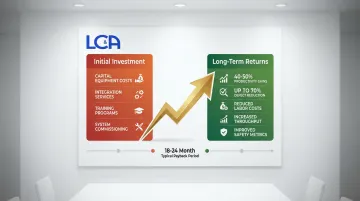
The financial case for automation is compelling. A small automotive parts supplier invested $20,000 in a smart manufacturing solution and realized $32,000 in savings within 18 months through reduced material loss and improved quality. While initial investments are significant, long-term cost savings through reduced labor, improved quality, and increased throughput deliver measurable returns.
Types of Factory Automation Systems
Fixed Automation
Fixed automation uses dedicated equipment designed for high-volume, repetitive production of standardized products. Once configured, these systems produce the same item continuously with minimal variation.
Advantages:
- Delivers highest production rates for standardized products
- Achieves lowest per-unit cost at high volumes
- Provides proven reliability for repetitive tasks
- Minimizes labor requirements once configured
Disadvantages:
- Inflexible—difficult and expensive to reconfigure
- Requires high initial capital investment
- Economical only for very high production volumes
Examples: Automotive assembly lines producing thousands of identical vehicles, beverage bottling plants filling millions of containers with the same product.
Programmable Automation
When production shifts from single products to batches with variations, programmable automation systems offer the needed flexibility. These systems can be reprogrammed to handle different product configurations, though each batch requires setup time to reconfigure the equipment.
What sets programmable systems apart:
- Moderate flexibility through software reprogramming
- Trade-off between flexibility and production speed
- Suitable for medium to high production volumes with product variety
Examples: CNC machining centers producing different parts through program changes, industrial robots with programmable routines for varied assembly tasks.
Flexible Automation
Flexible automation systems quickly switch between products with minimal downtime, enabling mixed-model production on the same line. Computer control and real-time adjustments allow rapid reconfiguration without extensive manual setup.
Core capabilities:
- High flexibility with quick changeovers
- Continuous production flow despite product variety
- Higher initial investment but greater adaptability
Examples: Flexible manufacturing systems (FMS) producing varied parts in any sequence, automated guided vehicles (AGVs) adapting material handling routes dynamically.
Integrated Automation
Integrated automation connects multiple systems end-to-end, creating unified manufacturing operations. Controls integration links production equipment, inventory management, quality control, and enterprise systems into a connected digital system.
Integrated systems leverage:
- SCADA systems for supervisory control across facilities
- MES (Manufacturing Execution Systems) for production management
- IoT sensors for real-time data collection
- Centralized control platforms for unified operations
Examples: Smart factories with connected sensors feeding real-time data to centralized analytics platforms, enabling predictive maintenance and dynamic production optimization.
Choosing the Right Automation Type
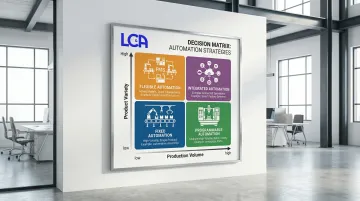
Matching automation type to your production needs requires careful analysis:
- High-volume, single product: Fixed automation delivers lowest per-unit cost
- Batch production with variety: Programmable automation balances flexibility and efficiency
- Mixed-model production: Flexible automation enables rapid changeovers
- Complex, connected operations: Integrated automation optimizes entire production ecosystems
Working with experienced controls integration partners helps align your automation strategy with production volumes, product variety, and long-term business goals.
Key Technologies Powering Factory Automation
Industrial Robotics and Motion Control
Industrial robots form the backbone of modern factory automation, handling tasks requiring precision, repeatability, and endurance beyond human capabilities.
Common robotic applications:
- Welding (handling 95% of spot welding in automotive manufacturing)
- Palletizing and material handling
- Assembly operations requiring sub-millimeter precision
- Painting and finishing tasks
Collaborative robots (cobots) represent a rapidly growing segment, accounting for 19.6% of total robot orders in North America. Modern industrial robots deliver exceptional precision, with approximately 70% featuring repeatability equal to or better than 0.05 mm—roughly the width of a human hair.
Sensors, Vision Systems, and Data Collection
While robots execute the physical work, sensors and machine vision systems provide the eyes and ears of modern automation. These technologies enable real-time monitoring and quality inspection throughout production processes.
Key sensor types:
- Proximity sensors detect object presence and position
- Temperature sensors monitor process conditions
- Pressure sensors ensure proper system operation
- Vibration sensors feed AI models for predictive maintenance
Machine vision systems perform tasks ranging from simple presence detection to complex metrology and optical character recognition. High-resolution optical sensors now verify EV battery welds in milliseconds, ensuring structural integrity without slowing production.
These sensors generate continuous data streams that drive predictive maintenance, process optimization, and quality control—constantly improving manufacturing performance.
Control Systems and Software Platforms
Programmable Logic Controllers (PLCs) coordinate automated operations by executing control logic at high speeds. As manufacturing facilities become more connected, security has become critical. Modern PLCs like Honeywell's ControlEdge now achieve cybersecurity certifications (ISASecure EDSA Level 2) to address growing industrial threats.
For facilities requiring comprehensive PLC programming and integration, experienced partners like Lashley, Cohen and Associates provide design, implementation, and troubleshooting services that ensure reliable control system performance.
Distributed Control Systems (DCS) divide complex control tasks into subsystems, optimized for continuous control loops in process industries like chemical manufacturing.
Modern software platforms enable:
- Remote monitoring and diagnostics
- Real-time analytics and performance tracking
- Integration with enterprise systems (ERP, MES)
- Predictive maintenance scheduling
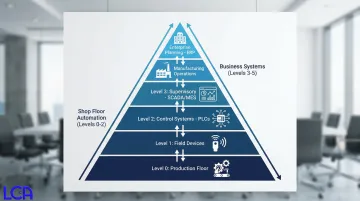
The ISA-95 standard defines the hierarchy connecting shop floor automation (Levels 0-2) with manufacturing operations management (Level 3) and business planning systems (Level 4). This framework enables seamless data flow from sensors to enterprise decision-making.
Implementation Considerations for Factory Automation
Assessing Readiness and Defining Objectives
Successful automation begins with thorough readiness assessment. Evaluate current processes to identify bottlenecks, inefficiencies, and high-impact opportunities for automation.
Define clear ROI goals tied to specific business objectives—whether capacity increase, quality improvement, or cost reduction.
Critical assessment questions include:
- Which processes create the most significant bottlenecks?
- Where do quality issues most frequently occur?
- Which tasks pose the greatest safety risks?
- What production volumes justify automation investment?
Answering these questions aligns your automation strategy with business objectives, ensuring implementation delivers measurable value rather than technology for its own sake.
Planning for System Integration and Scalability
Integrating new automation with legacy equipment presents significant challenges. Different manufacturers use proprietary protocols, and older systems often lack modern connectivity options.
Controls integration requires expertise across industrial protocols to ensure seamless communication between systems. Partners experienced with platforms ranging from Allen-Bradley to multiple other manufacturers' hardware can ensure compatibility across mixed automation environments. Lashley Cohen and Associates brings this breadth of platform experience to controls integration projects, drawing on over 35 years in project management and engineering services across diverse manufacturing sectors.
Scalability planning ensures automation investments adapt to future needs. Design systems with expansion capacity, standardized interfaces, and modular architectures that accommodate growth without requiring complete replacement.
Managing Change and Training Workforce
The human side of automation often determines implementation success. Address employee concerns proactively through clear communication about how automation changes roles rather than eliminating jobs. This approach reduces resistance and builds buy-in.
Effective workforce transition strategies:
- Upskilling programs that train operators to manage automated systems
- Involving employees in automation planning to gain buy-in
- Clear communication about new roles and career paths
- Gradual implementation that allows adaptation time
Manufacturers successfully transitioning to automation redeploy workers from repetitive manual tasks to higher-value activities like system monitoring, quality oversight, and continuous improvement initiatives.
Real-World Applications Across Industries
Food and Beverage Manufacturing
Food and beverage manufacturers implement automation across multiple operations:
- Packaging lines and material handling
- Process control for mixing and cooking
- Quality inspection and consistency monitoring
A waffle cookie manufacturer implemented an automated carousel line that increased production from 1,200 to 4,000 cookies per hour while reducing staff requirements from five to two workers. Material waste decreased by over $50 per batch, directly improving profit margins.
These systems address strict safety and consistency requirements while meeting high-volume production demands.
Automotive and Metal Fabrication
The automotive sector operates over 1 million industrial robots globally, with the US automotive industry utilizing more than 1,200 robots per 10,000 workers. These robots perform welding, assembly, painting, and material handling with precision that manual operations cannot match.
In metal fabrication, automation ensures consistent quality in cutting, forming, and finishing operations. The precision requirements and high-volume production in automotive manufacturing make it one of the most automated industrial sectors worldwide.
Chemical and Process Industries
Chemical manufacturing relies heavily on automation for:
- Batch processing and continuous production
- Safety monitoring and regulatory compliance
- Real-time process adjustments and quality control
Controls integration is essential for managing these complex chemical processes safely and efficiently.
A European chemical company migrated to Emerson's DeltaV DCS for complex batch processing of plastic additives, achieving ISA-S88 compliance and minimizing downtime through virtual factory acceptance testing.
BASF implemented Siemens Opcenter MES for crop protection production, reducing batch production time by 5-10% and eliminating five days of manual paperwork monthly.
With over 35 years of experience in process control systems and controls integration, companies like Lashley, Cohen and Associates help chemical manufacturers implement these critical automation solutions. The safety requirements and process complexity demand this level of precision and reliability.
Frequently Asked Questions
What is factory automation?
Factory automation uses control systems, software, and machinery to automate manufacturing processes, reducing human intervention while increasing efficiency, quality, and safety throughout production operations.
What are the different types of factory automation?
The four main types are fixed automation (dedicated high-volume equipment), programmable automation (reprogrammable batch systems), flexible automation (quick product changeovers), and integrated automation (end-to-end system connectivity).
What are the 5 levels of automation in factory operations?
The automation pyramid spans six levels, from the physical production floor (Level 0) through field devices, control systems (PLCs), supervisory systems (SCADA), production management (MES), to enterprise planning (ERP) at Level 5.
Does the US have fully automated factories?
Fully "lights-out" factories exist but remain rare in the US. Most manufacturers operate highly automated facilities with hybrid approaches—automation handles routine production while humans manage supervision and complex decisions.
What are the main benefits of implementing factory automation?
Key benefits include productivity gains of 40-50%, defect reductions up to 70%, lower operational costs, enhanced worker safety by eliminating hazardous tasks, and greater scalability for market demands.
How do I get started with factory automation in my facility?
Start by assessing current processes to identify high-impact opportunities, then define clear ROI targets. Partner with controls integration specialists who understand your industry, and begin with pilot projects to prove value before scaling.
Factory automation represents a fundamental transformation in how manufacturers compete and thrive. The combination of labor shortages, quality demands, and competitive pressures makes automation not just advantageous but essential for long-term success.
Whether you're considering your first automation project or expanding existing systems, controls integration expertise is critical for success. With over 35 years of experience, Lashley Cohen and Associates provides PLC programming, process control systems, and controls engineering for manufacturers across food & beverage, chemicals, metals, and building materials sectors.
Ready to explore factory automation for your facility? Contact Lashley Cohen and Associates at (770) 962-0878 or websales@lashleycohen.com to discuss how automation can transform your manufacturing operations.