Introduction
Manufacturing facilities today face persistent challenges: outdated automation, complex system integration, and gaps in safety compliance. The right control systems engineering partner doesn't just install equipment; they optimize production, eliminate costly downtime, and ensure regulatory compliance across increasingly complex industrial environments.
Manufacturing automation now spans PLC programming, SCADA integration, machine safety protocols, and cybersecurity. This complexity demands specialized expertise.
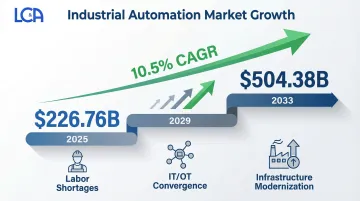
The global industrial automation market is projected to reach $504 billion by 2033, up from $226.76 billion in 2025, driven by Industry 4.0 adoption and legacy system modernization. Your choice of integration partner directly impacts your facility's competitive position in this rapidly evolving landscape.
TLDR
- Control systems integrators design automation solutions including PLC programming, SCADA/HMI systems, and safety controls
- Proven expertise shown through ISO-9001 certification, CSIA membership, and Rockwell/Siemens partnerships
- Industry experience and project success matter more than company size when selecting partners
- Top integrators include large $300M+ firms and specialized providers with vertical expertise
Overview of Control Systems Engineering
Control systems engineering is the discipline that designs, develops, and implements automation solutions to manage industrial processes—ensuring stability, operational efficiency, and safety across manufacturing environments.
These systems regulate everything from temperature and pressure in chemical processing to production line sequencing in food manufacturing, forming the technological backbone of modern industrial operations.
The market reflects growing demand: industrial automation is expanding at 10.5% annually, from $226.76 billion in 2025 to a projected $504.38 billion by 2033.
Key drivers behind this growth include:
- Labor shortages forcing manufacturers to automate critical processes
- IT/OT convergence enabling smarter, data-driven operations
- Aging infrastructure requiring modernization to prevent cybersecurity vulnerabilities and unplanned downtime
The companies highlighted below represent leading control systems engineering providers serving manufacturing and industrial sectors, each bringing specialized expertise in automation design, PLC programming, process control, and system integration.
Top Control Systems Engineering Companies
These companies were selected based on system integration revenue, technical platform expertise, industry certifications, and demonstrated client success across diverse manufacturing sectors.
RoviSys
RoviSys stands as the largest system integrator by revenue, delivering comprehensive automation solutions with global reach across process and discrete manufacturing industries.
Their vendor-agnostic approach and extensive experience in MES/MOM systems distinguish them in complex integration projects.
Key differentiators:
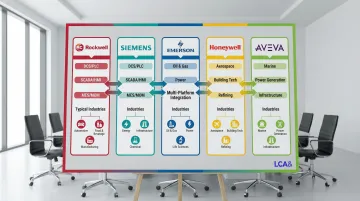
- Multi-platform expertise spanning Rockwell, Siemens, Emerson, Honeywell, and AVEVA
- Specialized DxOps suite enabling digital transformation and paperless manufacturing
- CSIA Certified for eight consecutive rounds, validating business management practices
- Design-assist partnership model particularly effective for large-scale greenfield projects
| Category | Details |
|---|---|
| Total SI Revenue | $325,670,027 (2025) |
| Key Industries Served | Life Sciences, Data Centers, Food & Beverage, Chemical, Oil & Gas, Power & Energy |
| Technical Specializations | DCS/PLC programming, SCADA/HMI development, batch automation, MES/MOM integration, process optimization, Industrial AI |
Prime Controls
Prime Controls combines system integration with I&C (Instrumentation & Controls) construction capabilities, offering turnkey automation from concept through commissioning.
Their comprehensive service model addresses both controls engineering and physical installation needs.
Key differentiators:
- Full-service approach integrating systems engineering with construction services
- Manufacturer-independent technology selection ensuring best-fit solutions
- Recognized as a 2025 System Integrator Giant for market presence
- Strong project management delivering complete automation projects on schedule
| Category | Details |
|---|---|
| Total SI Revenue | $306,212,220 (2025) |
| Key Industries Served | Oil & Gas, Water/Wastewater, Appliances, Electrical & Electronics Manufacturing |
| Technical Specializations | Systems integration, I&C construction, control system design, instrumentation services |
Wunderlich-Malec Engineering
Wunderlich-Malec takes an engineering-first approach to complex system integration, backed by 100% employee ownership that aligns team incentives with client success.
Their electrical engineering depth supports large-scale industrial projects requiring sophisticated technical solutions.
Key differentiators:
- Nationally recognized partnerships with Rockwell, Siemens, and Inductive Automation
- Specialized capabilities in IT/OT convergence and environmental information systems
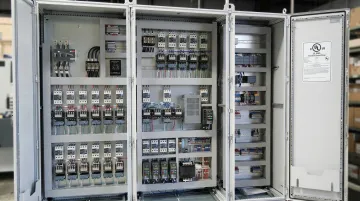
- ISO 9001 certified quality management with UL-rated panel fabrication
- Diamond-level Honeywell partner with broad platform expertise
| Category | Details |
|---|---|
| Total SI Revenue | $206,000,000 (2025) |
| Key Industries Served | Life Sciences, Data Centers, High Tech/Semiconductor, Food & Beverage, Power Generation, Mining |
| Technical Specializations | PLC/DCS programming, SCADA development, IT/OT integration, modular manufacturing, control panel fabrication |
Lashley Cohen and Associates
Founded in 1988, Lashley Cohen and Associates delivers controls integration expertise across diverse manufacturing sectors.
Their ISO-9001 certified process and professional engineering credentials ensure quality delivery from design through implementation.
Key differentiators:
- ISO-9001 certified project management process guaranteeing systematic quality control
- Certified PE Engineer on staff for regulatory compliance and stamped engineering drawings
- Rockwell Systems Bronze Partner with deep Allen-Bradley platform expertise
- Comprehensive lifecycle solutions spanning conceptualization through ongoing optimization
| Category | Details |
|---|---|
| Years in Business & Certifications | Founded 1988 (35+ years), ISO-9001 certified, Rockwell Bronze Partner, Certified PE Engineer on staff |
| Key Industries Served | Food & Beverage, Consumer Goods, Building Materials, Chemicals, Water/Wastewater, General Manufacturing |
| Technical Specializations | Controls integration, PLC/SCADA systems, process control optimization, machine vision integration, project management across production facility lifecycle |
Grantek
Grantek specializes in smart manufacturing and digital solutions for highly regulated industries, with particular strength in MES/MOM implementation and Industry 4.0 consulting. Their focus on data analytics and manufacturing intelligence sets them apart in pharma and food safety applications.
Key differentiators:
- Premier and Enterprise Integrator status with Inductive Automation
- Specialized safety and compliance solutions including data integrity auditing
- OEE Accelerator and manufacturing intelligence platforms
- CSI Certified System Integrator for Cognex vision systems
| Category | Details |
|---|---|
| Total SI Revenue | $69,390,000 (2025) |
| Key Industries Served | Pharma & Life Sciences, Food & Beverage, Consumer Packaged Goods, Data Centers |
| Technical Specializations | MES/MOM systems, IIoT solutions, data analytics, machine safeguarding, label verification, serialization |
How We Chose the Best Control Systems Engineering Companies
Many manufacturers make the critical mistake of selecting integrators based solely on company size or brand recognition. This overlooks factors that actually predict project success: industry-specific experience, technical certifications, and proven project management capabilities.
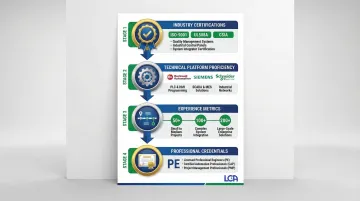
Our evaluation criteria prioritized:
- Industry certifications: ISO-9001 quality management, UL508A panel compliance, CSIA membership validating business practices beyond technical skills
- Technical platform proficiency: Demonstrated expertise with major automation platforms (Rockwell, Siemens, Emerson, Honeywell) and specialized technologies (MES, machine vision, IIoT)
- Experience metrics: Years in business, completed project count, and client references demonstrating successful outcomes across project scales
- Professional credentials: Licensed PE engineers, manufacturer partnerships, and third-party certifications proving technical competence
The best control systems engineering partners align their technical capabilities with your specific industry requirements and long-term operational goals, not just immediate project needs.
CSIA Certification, for example, validates an integrator's business management, financial health, and project execution capabilities. This goes far beyond basic technical proficiency to ensure they're stable, professionally managed partners.
Conclusion
Selecting the right control systems engineering partner requires evaluating both technical capabilities and strategic alignment with your operational goals and industry requirements. The integrators profiled here represent proven leaders, but the best choice for your facility depends on matching their specialized expertise to your specific automation challenges.
Assess potential partners based on relevant certifications (ISO-9001, UL508A, CSIA), industry-specific experience in your vertical, technical platform alignment, and documented project success, not company size alone.
With industrial automation growing rapidly and legacy system modernization becoming critical, your integration partner choice directly impacts competitive positioning.
Companies like Lashley Cohen and Associates provide controls integration backed by 35+ years of manufacturing expertise across food & beverage, chemicals, building materials, and general manufacturing. Their qualifications include:
- ISO-9001 certification with 5,000+ completed projects
- Certified PE engineering staff for technical oversight
- Rockwell Bronze Partner status for platform expertise
Contact their team at (770) 962-0878 to explore partnership opportunities.
Frequently Asked Questions
What does a control systems engineer do?
Control systems engineers design and implement automation solutions including PLC programming, SCADA systems, HMI development, and safety controls. They optimize production efficiency and ensure safe equipment operation across industrial processes.
Are control systems engineers in demand?
Yes, demand remains strong with projected 7% employment growth through 2034. Growth is driven by increasing automation adoption, labor shortages, and emerging IIoT and Industry 4.0 technologies requiring specialized expertise.
What certifications should I look for in a control systems engineering company?
Key certifications include ISO-9001 for quality management, UL508A for panel safety compliance, CSIA membership, licensed PE engineers, and manufacturer partnerships like Rockwell or Siemens demonstrating platform expertise.
How much does control systems engineering cost?
Costs vary widely based on project scope and complexity, typically ranging from $50,000-$150,000 for simple PLC upgrades to $500,000-$2,000,000+ for complete facility automation. Most mid-sized integration projects fall in the $100,000-$500,000 range, with engineering services typically representing 60% of costs versus 40% for equipment.
What industries use control systems engineering services?
Virtually all manufacturing and process industries require control systems engineering, including food & beverage, pharmaceuticals, chemicals, oil & gas, water/wastewater treatment, automotive, consumer goods, metals processing, building materials, and general manufacturing. Any sector requiring process automation, quality control, or regulatory compliance depends on these services.
How long does a typical control systems integration project take?
Project timelines range from 2-3 months for basic PLC programming and panel builds to 12-18 months for complete facility automation systems. Standard UL 508A compliant panels take 6-12 weeks to build, while enterprise-wide MES implementations or digital transformation initiatives can span multiple years with phased rollouts.