Introduction
As industrial automation grows more complex, mid-market manufacturers face increasing pressure to optimize operations without the overhead and inflexibility of enterprise-scale vendors. Many struggle to find partners who understand their specific operational challenges while delivering personalized service that larger firms simply cannot match.
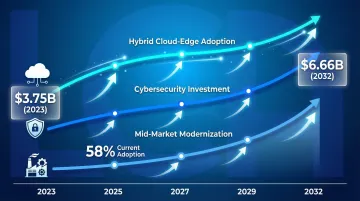
According to recent market data, the US SCADA market reached $3.75 billion in 2023 and is projected to hit $6.66 billion by 2032, driven by manufacturers modernizing aging infrastructure and adopting hybrid cloud-edge architectures.
This growth has created demand for a different kind of partner. Boutique SCADA integrators fill this gap by offering hands-on implementation, industry-specific customization, and long-term partnerships rather than one-time projects.
These specialized firms combine technical depth with the agility to adapt solutions to each client's unique operational environment—advantages that large software vendors and massive system integrators often sacrifice in favor of standardized approaches.
TL;DR
- Boutique SCADA integrators are specialized firms delivering custom design, implementation, and support for mid-market industrial clients
- Offer hands-on service, industry-specific expertise, and flexible technology solutions without vendor lock-in
- Selection criteria include CSIA certification, industry track record, technology partnerships, and documented post-implementation support
- Top integrators combine technical excellence with personalized service across industrial sectors
Overview of Boutique SCADA Integrators in the USA
What Defines a Boutique SCADA Integrator
Boutique SCADA integrators are specialized firms typically employing 10-100 people who focus on specific industries or regions. They deliver customized implementations rather than off-the-shelf solutions.
According to the Control System Integrators Association (CSIA), these firms differ fundamentally from large SCADA software vendors like Siemens, Rockwell, and Schneider Electric—which primarily sell platforms—and from massive system integrators who often apply standardized approaches across diverse clients.
Key characteristics include:
- Platform-agnostic selection based on client needs, not vendor relationships
- Deep expertise in 2-3 verticals (water/wastewater, food & beverage, manufacturing)
- Direct access to engineers and programmers, not layers of corporate hierarchy
- Tailored solutions addressing specific operational challenges rather than generic deployments
Market Growth and Industry Trends
The US SCADA integration market is experiencing significant expansion. The market grew from $3.75 billion in 2023 to a projected $6.66 billion by 2032, reflecting strong demand.
Three critical trends drive this growth:
- Hybrid cloud-edge adoption: Manufacturers are shifting from purely on-premise systems to hybrid solutions that combine local control reliability with cloud-based analytics scalability
- Cybersecurity urgency: Increasing cyber threats targeting critical infrastructure drive demand for integrators demonstrating expertise in ISA/IEC 62443 standards
- Mid-market modernization: 58% of manufacturers are actively modernizing operations to include autonomous and adaptive systems, creating demand for right-sized, scalable SCADA solutions
This guide profiles ten boutique SCADA integrators serving diverse industrial sectors across the USA. Selection criteria include years of experience, industry certifications, client retention, project portfolio diversity, and documented technical capabilities.
Top 10 Boutique SCADA Integrators in the USA
We selected these integrators based on CSIA certification status, technology partnerships (Rockwell, Siemens, Inductive Automation), minimum 10+ years of experience, verified project portfolios, and demonstrated expertise in specific industrial verticals.
1. Lashley, Cohen and Associates
Founded in 1988 with over 35 years of experience, Lashley, Cohen and Associates is ISO-9001 certified and operates as a Rockwell Systems Bronze Partner. They serve food & beverage, consumer goods, building materials, and general manufacturing sectors across Georgia, Alabama, Tennessee, North Carolina, South Carolina, and Florida.
With 5,000+ successful projects and 2,000+ clients served, they maintain a proven track record across diverse industrial applications.
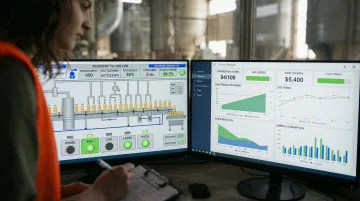
What sets them apart: Comprehensive lifecycle support from design through implementation, a certified PE engineer on staff, and a proactive approach aligning technical solutions with long-term business goals. Their expertise in optimizing manufacturing logistics through data-driven SCADA systems has delivered documented results, including a 50% throughput increase for a beverage filling line and 10% same-day improvements for food production operations.
2. Southern Flow
Based in Jacksonville, Florida, Southern Flow brings over 30 years of experience specializing in water, wastewater, and utilities throughout the Southeast and Eastern Seaboard.
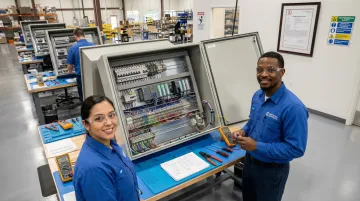
The company holds CSIA certification and maintains partnerships as a Rockwell Automation Silver System Integrator and VTScada Advanced Certified Integrator. Their UL 508A/698A certified panel shop supports comprehensive project delivery.
What sets them apart: Over 450 delivered projects including major municipal implementations like Melton Hill WWTP and St. Petersburg upgrades. Their combination of engineering expertise, certified panel fabrication capabilities, and deep water/wastewater specialization positions them as a go-to partner for utilities requiring reliable, compliant SCADA solutions.
3. Energenecs
Founded in 1979, Energenecs operates from Saukville, Wisconsin, serving the Midwest region (Wisconsin, Illinois, Upper Michigan) with a staff of approximately 40-50 personnel.
The company employs professional engineers and specializes exclusively in water and wastewater applications, managing 50-100 simultaneous control projects.
What sets them apart: 24/7 field service availability, an in-house UL panel shop, and specialized expertise in legacy system upgrades and radio telemetry. Their focused vertical specialization and round-the-clock support model make them particularly valuable for municipalities requiring continuous operational support for critical infrastructure.
4. NeoMatrix
With offices in Andover (MA), New Hampshire, and Colorado, NeoMatrix serves life sciences, food & beverage, automotive, and manufacturing sectors nationally with a strong Northeast presence.
NeoMatrix holds CSIA certification and Premier Integrator status with Inductive Automation (Top 100 selling), alongside Rockwell System Integrator credentials.
Key differentiators: Winner of the 2024 Firebrand Award for Ignition excellence, NeoMatrix specializes in MES and digital transformation alongside SCADA implementation. Their premier status with Inductive Automation reflects both technical expertise and successful project volume, positioning them as leaders in modern, scalable SCADA architectures.
5. SCADAware
Based in Normal, Illinois, SCADAware maintains CSIA certification and focuses on water, wastewater, and pipeline applications throughout the Midwest.
They've been selected for major municipal projects including the Springfield Metro Sanitary District's 80MGD treatment plant, demonstrating capability for large-scale, state-of-the-art automated facilities.
Core strengths: Deep expertise in high-capacity municipal water treatment facilities and specialized knowledge in pipeline monitoring systems. Their track record with complex, high-volume treatment operations positions them as a trusted partner for municipalities planning major infrastructure upgrades.
6. Quality Controls Corporation (QCC)
Founded in 2001 and headquartered in Lynnwood, Washington, QCC serves the Western United States (Pacific Northwest) with expertise in water/wastewater, transportation, energy, and fish hatcheries.
QCC operates a UL508A panel shop and maintains experience across multiple platforms including Allen Bradley, Siemens, Ignition, Wonderware, and VTScada.
What sets them apart: A customer satisfaction guarantee stating "no project is complete until everyone is happy," combined with platform flexibility across major SCADA technologies. QCC acquired regional expertise from SCADA Logic, consolidating Pacific Northwest capabilities and expanding their service footprint.
7. NIC Systems Corporation
Based in Cromwell, Connecticut, with 11-50 employees, NIC Systems serves the Northeast (Connecticut, New York, New Jersey) with specialization in water/wastewater, pharmaceutical, and manufacturing sectors.
They maintain expertise in Title 21 CFR Part 11 compliance for pharmaceutical applications and develop modular code libraries for operator training.
What sets them apart: Specialized capability in validated systems for regulated industries, particularly pharmaceutical manufacturing where compliance with FDA electronic records requirements is critical. Their modular approach to system development and operator training reduces implementation risk in highly regulated environments.
8. Control Systems NW (CSNW)
Founded in 2019, CSNW operates in the Pacific Northwest (Washington, Oregon, Idaho) serving public works, manufacturing, and industrial sectors. As an RH2 Company, CSNW combines boutique agility with access to extensive engineering resources.
The company holds electrical and control system contractor licenses, with team members contributing 75+ years of combined experience.
What sets them apart: The unique combination of boutique responsiveness with the backing of a larger engineering organization (RH2), providing clients with specialized attention while maintaining access to broader technical resources for complex projects requiring multidisciplinary engineering support.
9. OCD Automation
Founded in 2012 and based near Portland, Oregon, OCD Automation serves the Pacific Northwest with expertise in semiconductor, water treatment, and education sectors.
They specialize in PLC, SCADA, and HMI programming with a philosophy of "Obsessive Controls Disorder"—emphasizing meticulous attention to detail in every implementation.
What sets them apart: Diverse industry experience spanning high-tech semiconductor facilities to municipal water treatment and educational institutions. Their focus on precision and detail, combined with experience across vastly different operational environments, shows flexibility and technical breadth unusual for smaller integrators.
10. Prime Controls
Based in Lewisville, Texas, with national reach, Prime Controls operates as both a systems integration and I&C (Instrumentation and Controls) construction firm serving industrial automation, oil & gas, and water sectors. The company is structured specifically to meet industrial automation and control needs with comprehensive capabilities from design through construction.
What sets them apart: Dual capability as both system integrator and construction contractor, providing end-to-end project delivery including physical installation, instrumentation, and controls integration. This comprehensive service model reduces coordination complexity for clients requiring complete turnkey implementations.
How We Chose the Best Boutique SCADA Integrators
Common Selection Mistakes
Manufacturers frequently make costly errors when selecting SCADA integrators:
- Choosing based solely on lowest bid
- Focusing only on software brand names while ignoring implementation expertise
- Overlooking post-implementation support capabilities
- Failing to verify industry-specific experience
These mistakes often lead to project delays, cost overruns, and systems that fail to deliver expected operational improvements.
Our Evaluation Framework
To avoid these pitfalls, the integrators on this list were evaluated using rigorous criteria aligned with industry best practices:
Core selection factors:
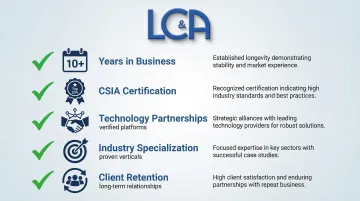
- Minimum 10+ years in business: Demonstrates stability and accumulated expertise across multiple technology generations
- CSIA certification or equivalent credentials: Only ~20% of CSIA members achieve certification, verifying best practices across project management, financial health, and quality assurance
- Technology partnerships: Verified relationships with major platforms (Rockwell, Siemens, Inductive Automation) indicating technical competency and ongoing training
- Industry specialization depth: Proven track record in specific verticals (water/wastewater, food & beverage, manufacturing) rather than generalist approaches
- Client retention and testimonials: Evidence of long-term relationships and documented client satisfaction
Business Outcomes That Matter
Experienced integrators with strong certifications consistently deliver measurable advantages: faster implementations through proven methodologies, fewer post-launch issues due to comprehensive testing protocols, better ROI through optimized system design that addresses actual operational bottlenecks, and long-term support preventing costly downtime.
According to CSIA best practices guidance, certified integrators demonstrate superior project management, cybersecurity competence, and financial stability—factors that directly impact project success and system longevity.
Conclusion
Selecting the right boutique SCADA integrator requires looking beyond brand recognition and price to evaluate hands-on experience, industry-specific expertise, and genuine commitment to long-term partnership rather than transactional project delivery.
The integrators profiled here demonstrate these qualities through CSIA certification, proven track records spanning decades, and documented client relationships that extend well beyond initial implementation.
When evaluating potential partners, prioritize these factors:
- Track record in your specific industry
- Post-implementation support model (response times and availability)
- Scalability of proposed solutions
- Cultural fit with your organization's operational goals
- Cybersecurity management systems and disaster recovery plans
- Knowledge transfer protocols if key personnel leave
Lashley, Cohen and Associates brings over 35 years of experience and ISO-9001 certification to SCADA integration projects across food & beverage, consumer goods, and building materials sectors. This depth of experience represents the boutique integrator approach profiled throughout this guide.
Partnering with an experienced integrator ensures your SCADA investment delivers measurable operational improvements aligned with your long-term business objectives.
Contact us at (770) 962-0878 or websales@lashleycohen.com to discuss your project requirements.
Frequently Asked Questions
What is a boutique SCADA integrator and how does it differ from large vendors?
Boutique SCADA integrators are specialized firms (typically 10-100 employees) that design, implement, and support custom SCADA systems. Unlike large vendors that primarily sell platforms, boutique firms offer personalized service, industry-specific customization, and direct access to technical experts.
How do I choose the right SCADA integrator for my facility?
Verify their experience in your specific industry and check for CSIA certification and technology partnerships. Review their project portfolio and client references, assess post-implementation support capabilities (response times and availability), and evaluate whether they understand your operational goals.
What industries do boutique SCADA integrators typically serve?
Common sectors include food & beverage, water and wastewater treatment, building materials, chemical processing, oil and gas, power generation, pharmaceutical manufacturing, and general industrial manufacturing. Most boutique integrators specialize in 2-3 verticals to develop deep domain expertise.
How much does SCADA integration typically cost?
Costs vary widely based on project scope, number of I/O points, system complexity, and customization requirements. Small projects may start around $12,000-$50,000 for basic RTU panel upgrades, while complex multi-site implementations can range from $200,000 to $1.5 million or more.
What is the typical timeline for a SCADA integration project?
Timelines depend on system complexity and facility size. Small projects may take 2-3 months covering design, development, testing, and deployment phases, while large implementations can require 6-12 months including Factory Acceptance Testing (FAT), Site Acceptance Testing (SAT), and commissioning. Experienced integrators provide realistic schedules with defined milestones and clear communication about potential delay factors.
What ongoing support should I expect from a SCADA integrator?
Typical support includes system monitoring and maintenance, software updates and security patches, troubleshooting with defined response times (often 4-8 hours for critical issues), operator training, and system expansion guidance. Many integrators offer 24/7 availability for critical infrastructure applications.