Introduction
Georgia's industrial economy is under pressure to perform. Facilities across food & beverage, water utilities, energy, and discrete manufacturing are competing harder than ever on uptime, output quality, and regulatory compliance.
SCADA (Supervisory Control and Data Acquisition) systems have become central to that effort—enabling real-time monitoring, centralized control, and operational decisions that directly impact throughput and compliance.
Choosing the wrong SCADA integrator, though, can mean months of delays, costly rework, and production losses that don't get recovered. The selection decision matters more than most facilities realize until they're already mid-project.
This article profiles the top five SCADA system integrators operating in Georgia, evaluated on certifications, sector experience, and proven project delivery.
TL;DR
- SCADA integrators centralize control, enable real-time monitoring, and reduce operational risk across distributed industrial assets
- Georgia's manufacturing, water/wastewater, and food & beverage sectors generate strong demand for SCADA integration across the Southeast
- Strong integrators carry ISO certifications, OEM partnerships (Rockwell, Ignition, VTScada), and licensed PE engineers on staff
- Lashley Cohen and Associates, APAC Controls, Vertech, Gray Solutions, and Hargrove Controls each serve distinct niches—evaluate by sector fit and track record
- Match each integrator to your industry vertical and project scale before making a shortlist
Overview of SCADA Integration in Georgia
SCADA systems allow industrial operators to monitor and control distributed processes in real time. They aggregate data from PLCs, RTUs, and sensors across facilities—or even multiple sites—into a single interface for alarming, logging, and remote control.
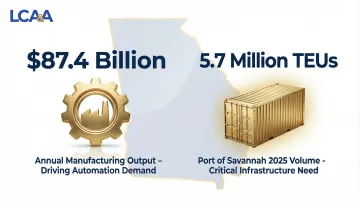
That kind of real-time visibility becomes critical at Georgia's industrial scale. The state's manufacturing sector generates $87.4 billion annually, and the Port of Savannah processed 5.7 million TEUs in 2025 alone — operations that depend on experienced integrators to keep automation infrastructure running without interruption.
The five firms below were selected based on technical capabilities, industry credentials, and demonstrated track records serving Georgia's manufacturing and industrial sectors.
Top 5 SCADA System Integrators in Georgia
The firms below were evaluated on industry certifications, breadth of SCADA capabilities, sector coverage, client track record, and regional presence in Georgia.
Lashley Cohen and Associates
Founded in 1988 and headquartered in Lawrenceville, GA, Lashley Cohen and Associates has built a 35+ year track record delivering controls integration, SCADA engineering, and automation solutions across manufacturing, food & beverage, water/wastewater, chemicals, and metals sectors.
What sets them apart: ISO-9001 certified project management, a Certified PE Engineer on staff, Rockwell Systems Bronze Partner status, and a portfolio of 5,000+ completed projects across 2,000+ clients—credentials that few Georgia-based integrators can match.
| Category | Details |
|---|---|
| Industries Served | Consumer Goods, Food & Beverage, Water & Wastewater, Chemicals, Metals, Building Materials, General Manufacturing |
| Key Capabilities | SCADA design and implementation, PLC/HMI integration, panel design, controls engineering, project management |
| Certifications & Credentials | ISO-9001 certified, Rockwell Systems Bronze Partner, Certified PE Engineer on staff, 35+ years in operation |
Notable project experience includes a complete control system for a new water treatment facility (their largest project to date), ongoing support for beverage manufacturers achieving 50% throughput increases, and rubber and tire manufacturing batching systems managing 2,000 recipes.
APAC Controls, LLC
Based in Cumming, Georgia, APAC Controls is a VTScada Certified Solution Provider specializing in PLC, HMI, DCS, and SCADA systems for industrial clients. Their certification signals deep expertise in Trihedral's VTScada platform, widely used in water/wastewater and mission-critical applications.
APAC Controls focuses on delivering high-performance HMI/SCADA software integration for facilities requiring dependable, high-availability monitoring systems. Their local presence and specialized VTScada credentials make them a practical choice for Georgia businesses needing proven expertise in this platform.
| Category | Details |
|---|---|
| Industries Served | Water & Wastewater, Manufacturing, Process Industries |
| Key Capabilities | PLC programming, HMI design, DCS integration, SCADA system implementation, modernization and upgrades |
| Certifications & Credentials | VTScada Certified Solution Provider |
APAC is well-suited for Georgia facilities seeking a local partner with specific VTScada ecosystem expertise, particularly for municipal or utility-scale monitoring projects.
Vertech
Vertech is a multi-state industrial automation firm with documented Georgia project experience, most notably the SCADA deployment for Georgia Power's 30 MW solar plant—a flagship project covering real-time monitoring, data accuracy, and centralized control across 416 acres and 12 conversion stations.
The solar plant project utilized Allen-Bradley CompactLogix PLCs, FactoryTalk View SE, and FactoryTalk Historian to create a unified "single pane of glass" for operations, enabling nuanced alarm filtering and root-cause analysis.
Vertech holds Premier Ignition Certified Integrator status—the highest level of certification for Inductive Automation's platform—and was named the Top Ignition Integrator of 2019.
| Category | Details |
|---|---|
| Industries Served | Solar/Energy, Water, Food & Beverage, Manufacturing, Data Centers |
| Key Capabilities | SCADA, controls & automation, digital plant solutions, industrial IT, panel design |
| Certifications & Credentials | Premier Ignition Certified Integrator, Top Ignition Integrator 2019 |
Vertech's expertise spans renewable energy, water infrastructure, and manufacturing—the right fit for facilities requiring Ignition platform specialization and utility-scale SCADA deployments.
Gray Solutions (Gray AES)
Gray Solutions, now part of Gray AES, has earned back-to-back recognition as Rockwell Automation System Integrator Partner of the Year for 2023 and 2024, and holds System Integrator Giant status from Control Engineering. Few firms in the Southeast carry that level of OEM validation.
Gray AES maintains an Atlanta, GA office, supporting local clients with integrated architecture, engineering, and automation services. Their "Solutioneer" approach covers everything from robotics and advanced vision systems to complete digital transformation and SCADA integration.
| Category | Details |
|---|---|
| Industries Served | Food & Beverage, Consumer Goods, Manufacturing, Pharmaceuticals |
| Key Capabilities | Full-stack automation, SCADA integration, robotics, advanced vision systems, digital transformation |
| Certifications & Credentials | Rockwell Automation System Integrator Partner of the Year (2023, 2024), Control Engineering System Integrator Giant |
Gray Solutions is best suited for large-scale greenfield plants or major modernizations in the food & beverage or consumer goods sectors requiring Rockwell Automation expertise.
Hargrove Controls & Automation
Hargrove Controls & Automation combines the reach of a large EPC (Engineering, Procurement, Construction) firm with dedicated automation expertise. The firm maintains verified office locations in Johns Creek (Atlanta area) and Savannah, GA.
Hargrove implements control systems across pulp & paper, petroleum & chemicals, life sciences, and power generation. As a recognized Rockwell Automation Partner, they provide multi-discipline services including DCS, PLC, and SIS (Safety Instrumented Systems) process control.
| Category | Details |
|---|---|
| Industries Served | Pulp & Paper, Petroleum & Chemicals, Life Sciences, Power Generation |
| Key Capabilities | DCS, PLC, SIS process control, SCADA integration, EPC project delivery |
| Certifications & Credentials | Rockwell Automation Partner |
Hargrove is a strong candidate for heavy process industries—chemicals, paper, energy—in Georgia that require integrated safety systems and EPC project delivery.
How We Chose the Best SCADA System Integrators in Georgia
Each integrator on this list was evaluated against real-world criteria that plant managers and operations teams actually rely on. Choosing based on name or price alone — without checking sector-specific experience or credentials — is how projects stall and budgets blow out.
Key selection factors include:
- ISO or quality certifications – ISO-9001 ensures documented quality management procedures and auditability, reducing project risk
- OEM/platform partnerships – Rockwell, Ignition, VTScada certifications signal deep technical expertise and access to vendor support
- Licensed engineering staff – PE engineers provide design authority and regulatory compliance for complex installations
- Breadth of SCADA capabilities – From historian setup to alarm management and remote monitoring architecture
- Track record of completed projects – Verified project history in relevant sectors demonstrates proven delivery
- Responsiveness to Georgia's industrial sectors – Local presence and regional project experience translate to faster deployment and ongoing support
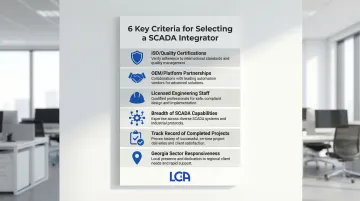
The right integrator check on all six — and the wrong one often looks identical on paper until a project hits a compliance snag or a critical system goes down at 2 a.m.
Conclusion
Choosing a SCADA integrator is a long-term decision. The right firm will align with your facility's growth goals, regulatory environment, and process complexity — not just deliver a working system on day one.
Evaluate candidates on scalability, ongoing support, and total cost of ownership — not just upfront integration fees. A capable integrator will provide a defined project plan with milestones during scoping, transparent cost drivers, and demonstrated experience in your sector.
For Georgia-based manufacturers and industrial operators ready to modernize their SCADA infrastructure, Lashley Cohen and Associates brings over 35 years of local experience, ISO-9001 certified processes, and more than 5,000 completed projects across industries ranging from food and beverage to metals and water treatment. Contact us at websales@lashleycohen.com or (770) 962-0878 to discuss your automation needs.
Frequently Asked Questions
What does a SCADA system integrator do?
A SCADA integrator designs, programs, and deploys the hardware and software systems that allow industrial operators to monitor and control distributed processes in real time. This covers everything from sensor wiring and PLC configuration to HMI development, historian setup, and alarm management architecture.
What industries in Georgia commonly use SCADA systems?
Georgia's major SCADA-using sectors include water and wastewater utilities, food and beverage manufacturing, energy and solar generation, chemicals, metals, and general manufacturing.
What certifications should I look for in a SCADA integrator?
Look for ISO-9001 (quality management), licensed PE engineers on staff, OEM platform certifications (Rockwell, Siemens, Inductive Automation), and membership in the Control System Integrators Association (CSIA).
How long does a SCADA integration project typically take?
Simple single-site installations may take a few weeks; multi-site or greenfield builds can run several months. Ask for a defined project plan with milestones during the scoping phase.
What is the difference between SCADA, PLC, and HMI systems?
PLCs execute local control logic at the machine level. HMIs provide operator interfaces for individual machines or process areas. SCADA operates as the supervisory layer—aggregating data from multiple PLCs and HMIs across a facility or network to enable centralized monitoring, alarming, and reporting.
How much does SCADA system integration cost in Georgia?
Cost is driven by system scale, I/O point count, PLC/RTU hardware, software licenses (perpetual or subscription), engineering services, commissioning labor, and travel. Request scoped quotes from at least two or three integrators to compare total project cost against ongoing support value.