Introduction: Control Systems as the Nervous System of Oil & Gas Operations
Modern oil and gas operations manage thousands of data points simultaneously across vast, often remote facilities: offshore platforms battling hurricane-force winds, transcontinental pipelines spanning thousands of miles, refineries processing complex hydrocarbon streams.
A single hour of unplanned downtime costs oil and gas facilities nearly $500,000, with annual losses from operational interruptions reaching $149 million per facility. This financial impact explains why control systems function as the critical nervous system of petroleum operations.
These integrated technology systems enable safe, efficient, and compliant operations in one of the world's most demanding industries. They continuously monitor critical process variables, automatically regulate operations, and provide the real-time visibility operators need to prevent catastrophic incidents while optimizing production.
This article explores three major themes: the unique operational challenges facing oil and gas control systems, the critical role of SCADA and automation technologies, and the emerging innovations reshaping the sector's future.
TLDR: Key Takeaways
- Control systems in oil and gas must withstand extreme conditions while managing safety-critical operations and legacy equipment
- SCADA provides real-time monitoring and control for geographically dispersed assets across upstream, midstream, and downstream operations
- AI/ML, digital twins, and edge computing are revolutionizing predictive maintenance and operational efficiency
- Implementation success depends on integrating modern technology with existing infrastructure while meeting strict regulatory standards
- Precise control of pressure, flow, level, and temperature remains fundamental to all automation strategies
Understanding Control Systems in Oil & Gas Operations
What Control Systems Do in Oil & Gas
Control systems are integrated hardware and software platforms that monitor, control, and optimize operations across the entire petroleum value chain—from exploration and production through refining and distribution.
These systems implement closed-loop control: sensors detect process variables (pressure, temperature, flow, level), transmitters send signals to controllers, controllers make decisions based on setpoints, and final control elements (valves, motors, actuators) execute commands to maintain optimal conditions.
This continuous feedback mechanism ensures operations remain within safe parameters while maximizing efficiency. For example, in a refinery distillation column, temperature sensors throughout the tower feed data to controllers that automatically adjust steam flow to heating elements, maintaining precise separation of petroleum fractions.
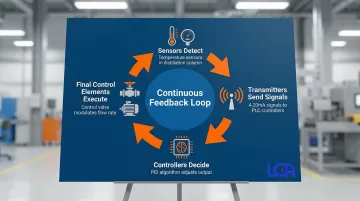
Types of Control Systems Used
The oil and gas industry employs three primary control system architectures, each suited to specific applications:
Distributed Control Systems (DCS) handle complex, continuous process control in refineries and processing plants. These systems manage hundreds of interrelated control loops simultaneously, providing operators with comprehensive process visualization.
DCS delivers advanced control capabilities for applications like crude distillation, catalytic cracking, and hydroprocessing units—critical processes that require precise coordination of multiple variables.
Programmable Logic Controllers (PLCs) handle discrete control tasks and sequential operations. In oil and gas, PLCs commonly control pipeline pump stations, compressor stations, and production facility equipment. Their rugged design and reliability make them ideal for remote, unmanned installations where maintenance access is limited.
Supervisory Control and Data Acquisition (SCADA) systems provide wide-area monitoring and control of geographically dispersed assets. SCADA serves as the backbone technology for pipeline operations, offshore platform monitoring, and managing networks of remote production facilities from centralized control rooms.
Control system integration specialists like Lashley Cohen and Associates bring decades of experience programming and troubleshooting these platforms across industrial sectors, applying lessons from manufacturing automation to enhance reliability in process-critical environments.
Critical Challenges Facing Oil & Gas Control Systems
Extreme and Hazardous Operating Environments
Oil and gas facilities operate in some of the world's harshest conditions, placing extraordinary demands on control system hardware:
- Offshore platforms face saltwater corrosion, humidity exceeding 90%, and hurricane-force winds
- Arctic facilities must withstand temperatures as low as -40°F while maintaining precise control
- Desert operations experience temperature swings of 80°F between day and night, accelerating equipment degradation
These extreme conditions require ruggedized hardware rated for hazardous areas under Class I Division 1/2 classifications (North America) or IECEx/ATEX Zone standards (international). These ratings ensure equipment cannot ignite flammable vapors or gases present in petroleum environments.
Equipment failure carries severe financial consequences. Offshore organizations experience an average annual impact of $38 million from unplanned downtime, with worst-case scenarios reaching $88 million per year.
Even a 1% downtime rate translates to over $5 million in annual losses, making environmental resilience a critical design requirement.
Safety-Critical Operations and Regulatory Compliance
Control system failures in oil and gas can result in catastrophic consequences—explosions, fires, environmental disasters, and loss of life. This reality demands multiple layers of protection:
Layers of Protection:
- Basic process control systems maintain normal operations
- Alarm systems alert operators to abnormal conditions
- Safety Instrumented Systems (SIS) automatically intervene when dangerous conditions develop
- Emergency Shutdown (ESD) systems provide final protection by safely shutting down operations
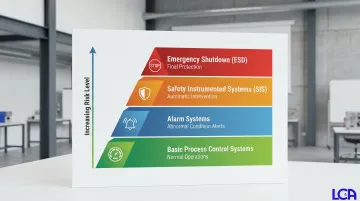
Rigorous regulatory frameworks govern these control systems. IEC 61511 mandates a lifecycle approach for Safety Instrumented Systems, covering everything from initial risk assessment through ongoing operation and maintenance.
Recent updates explicitly require SIS designs to provide resilience against cybersecurity risks, bridging functional safety with cyber defense.
API standards govern specific applications: API RP 554 covers Process Control Systems design, API RP 556 specifies requirements for gas-fired heater controls, and API Std 17F governs subsea production control systems. The EPA requires continuous emissions monitoring systems (CEMS) for refinery operations, with control systems providing the audit trails necessary for compliance verification.
Remote and Unmanned Operations Management
The petroleum industry increasingly operates facilities in isolated locations where human presence is minimal or nonexistent:
- Offshore platforms positioned hundreds of miles from shore
- Pipeline stations scattered across remote territories with limited road access
- Arctic production facilities accessible only by air or during brief summer seasons
Control systems must enable remote monitoring and control from centralized operations centers, often managing dozens of unmanned sites from a single control room. This creates unique challenges:
Operational Challenges:
- Limited site access for maintenance, sometimes requiring helicopter transport
- Reliance on satellite or radio communications with bandwidth constraints and latency
- Need for autonomous fault detection and response when communication is lost
- Equipment must operate reliably for extended periods between service visits
Modern SCADA architectures address these challenges through intelligent Remote Terminal Units (RTUs) capable of local decision-making and exception-based reporting that optimizes limited communication bandwidth.
Cybersecurity Vulnerabilities and Threats
The convergence of operational technology (OT) and information technology (IT) has exposed control systems to cyber threats that were previously not a concern. ICS-specific vulnerabilities increased by 57% between 2022 and 2023, indicating growing adversary focus on OT systems.
Critical Threat Vectors:
- Ransomware attacks targeting control systems and forcing operational shutdowns
- Nation-state actors specifically targeting energy infrastructure
- Insider threats from employees or contractors with system access
- Supply chain vulnerabilities in control system components
These threats materialized dramatically when the 2021 Colonial Pipeline attack forced a six-day shutdown of critical fuel infrastructure. The incident caused widespread shortages and exposed dangerous gaps in network segmentation between IT and OT systems.
This event accelerated adoption of rigorous standards including IEC 62443 for industrial automation cybersecurity and the NIST Cybersecurity Framework.
Multi-Layered Defense Approach:
- Network segmentation following the Purdue Model with DMZs between IT and OT
- Role-based access controls limiting system access to authorized personnel
- Encrypted communications for SCADA and control networks
- Intrusion detection systems specifically designed for industrial protocols
- Regular security assessments and vulnerability management programs
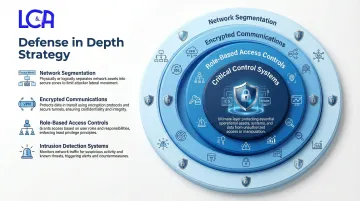
Legacy System Integration and Modernization
Many oil and gas facilities operate with control systems installed 20-30 years ago, designed before modern networking and cybersecurity standards existed. Approximately 42% of offshore facilities evaluated were over 15 years old, and nearly 50% of downstream operators express concern about technological obsolescence.
Technical Challenges:
- Proprietary protocols that don't communicate with modern systems
- Lack of spare parts for obsolete equipment, creating single points of failure
- Inability to integrate with advanced analytics platforms and predictive maintenance tools
- Legacy systems running outdated operating systems (Windows XP/7) with known security vulnerabilities
Business Challenges:
- Modernizing without disrupting continuous operations in facilities that cannot afford downtime
- Justifying capital investment with clear ROI during uncertain market conditions
- Managing the transition while maintaining operational and safety integrity
Successful modernization requires hybrid solutions and middleware that bridge legacy and modern systems. Control system integration specialists with deep experience in industrial automation—like those with 35+ years navigating these complex challenges—help facilities upgrade their systems while maintaining the operational performance and reliability that production demands.
Key Process Variables in Oil & Gas Control
Four fundamental process variables form the foundation of all oil and gas control systems: pressure, flow, level, and temperature. Control these precisely, and you ensure safety, efficiency, product quality, and regulatory compliance.
The Critical Role of Pressure Control
Pressure directly affects safety, efficiency, and product quality in petroleum operations:
Safety Applications:
- Preventing blowouts during drilling and production by maintaining proper wellhead pressure
- Avoiding vessel ruptures and explosions by keeping pressures within design limits
- Enabling emergency depressurization systems to safely vent dangerous pressure buildups
Efficiency Applications:
- Optimizing compression and pumping operations to minimize energy consumption
- Maintaining proper pressure differentials across pipelines for efficient transportation
- Controlling pressure in separation vessels to maximize hydrocarbon recovery
Types of Pressure Measurement:
- Absolute pressure: Measured against perfect vacuum; critical for vapor pressure calculations
- Gauge pressure: Referenced to atmospheric pressure and used for most process control applications
- Differential pressure: Captures the difference between two points, essential for flow measurement and pipeline leak detection
Flow Measurement and Management
Flow measurement serves three critical purposes in oil and gas operations:
Custody Transfer: Flow measurement determines the volume or mass of product changing ownership. Revenue depends on this accuracy. API Manual of Petroleum Measurement Standards (MPMS) requires strict accuracy, with measurement uncertainty directly affecting financial settlements worth millions of dollars.
Production Optimization: Real-time flow data allows operators to balance production across multiple wells, optimize artificial lift systems, and maximize recovery from reservoirs.
Leak Detection: Continuous flow monitoring at multiple pipeline points allows mass balance calculations that detect leaks. Most systems require data updates every 5 seconds or less for adequate sensitivity.
Common Flow Measurement Technologies:
- Orifice plates with differential pressure transmitters provide cost-effective measurement for gas pipelines
- Turbine meters offer good accuracy for clean liquid applications
- Ultrasonic meters deliver high accuracy for gas pipelines with excellent diagnostic capabilities
- Coriolis meters provide direct mass flow measurement with accuracy of ±0.25% or better, increasingly used in custody transfer applications
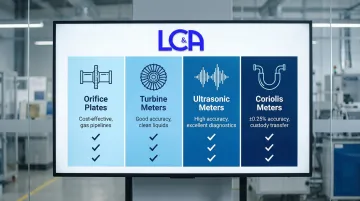
Level and Temperature Monitoring
Level Control Applications: Level measurement prevents overflow incidents that could cause environmental disasters and production losses. In separation vessels, precise level control maintains the interface between oil, water, and gas phases, optimizing product recovery.
Storage tank level monitoring provides accurate inventory management and prevents costly tank overfills.
Guided wave radar technology is replacing manual gauging for crude oil custody transfer, providing continuous high-precision level measurement and interface detection between oil and water layers. This technology improves safety by eliminating the need for personnel to climb tank roofs for manual measurements.
Temperature Control Applications: Refining processes demand precise thermal management to drive chemical reactions effectively. Distillation columns require temperature control at multiple points to achieve proper separation of petroleum fractions.
Temperature monitoring also prevents equipment damage from thermal stress, detects bearing failures in rotating equipment, and ensures product specifications are met.
SCADA Systems: The Backbone of Modern Oil & Gas Operations
SCADA (Supervisory Control and Data Acquisition) is a system architecture that combines hardware and software to enable remote monitoring and control of geographically dispersed assets in real-time.
For oil and gas operators managing pipelines spanning thousands of miles or production facilities scattered across remote regions, SCADA provides the centralized visibility and control essential for safe, efficient operations.
How SCADA Systems Work in Oil & Gas
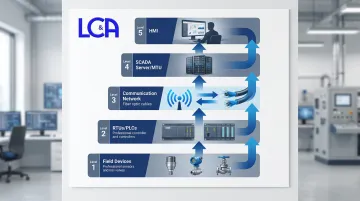
SCADA architecture follows a hierarchical structure that collects data from the field and presents it to operators for decision-making:
Data Flow Architecture:
- Field devices (sensors, actuators, valves) measure process variables and execute control commands
- Remote Terminal Units (RTUs) or PLCs collect data from field devices and perform local control functions
- Communication network (fiber, radio, satellite) transmits data between field sites and control centers
- Master Terminal Unit (MTU) or SCADA server processes incoming data, maintains historical records, and manages communications
- Human-Machine Interface (HMI) displays real-time data to operators and allows them to issue control commands
Modern SCADA systems use two primary communication mechanisms:
- Polling: Master station regularly queries each RTU for current data, suitable for stable processes
- Exception-based reporting: RTUs transmit data only when values change beyond configured thresholds, dramatically reducing communication bandwidth requirements—critical for satellite or radio links with limited capacity
SCADA Applications Across the Oil & Gas Value Chain
Upstream (Exploration & Production):
- Monitoring wellhead pressure and flow rates across production fields
- Controlling artificial lift systems (rod pumps, electric submersible pumps, gas lift)
- Managing gathering networks that collect production from multiple wells
- Optimizing production allocation and balancing across facilities
An international E&P company achieved a 17.8% production gain (694.8 barrels of oil per day) by implementing DeltaV SaaS SCADA for remote gas lift optimization, eliminating the need for costly and time-consuming physical site visits.
Midstream (Transportation & Storage):
- Pipeline leak detection through mass balance calculations and pressure monitoring
- Compressor station control and optimization
- Terminal and storage facility monitoring
- Batch tracking for multi-product pipelines
Downstream (Refining & Distribution):
- Integration with DCS for refinery-wide process visibility
- Retail distribution monitoring across terminal networks
- Blending and product quality control
- Loading rack automation and custody transfer
Communication Technologies for SCADA
Selecting appropriate communication infrastructure requires balancing bandwidth, latency, reliability, cost, and security:
Fiber Optic Networks provide high bandwidth (Gbps), low latency, and excellent reliability for backbone communications and centralized facilities. Deployment costs of $50,000-$100,000 per mile make fiber cost-prohibitive for remote sites.
Radio Systems (UHF/VHF) offer cost-effective communication for sites within line-of-sight, typically 20-30 miles. Licensed radio bands provide interference-free operation, while unlicensed bands (900 MHz, 2.4 GHz) offer lower cost but potential interference issues.
Satellite Communications (VSAT) are essential for offshore platforms and extremely remote locations. Modern VSAT solutions support data rates from 8 kbps to 832 kbps and integrate with both TCP/IP and legacy serial protocols, providing secure private networks.
Satellite links introduce latency (500-700 ms for geostationary satellites) that can impact real-time control applications.
Microwave Systems serve as robust alternatives for long-distance backhaul where fiber is cost-prohibitive, offering bandwidth up to several hundred Mbps with lower latency than satellite.
SCADA Data Historian and Analytics
Data historians store time-series data from SCADA systems, creating permanent records for trend analysis, regulatory compliance, and operational optimization. Modern historians process massive data volumes—Shell's predictive maintenance system processes over 20 billion rows of data per week from 3 million data streams.
Advanced analytics platforms integrate with SCADA historians to provide:
- Predictive insights identifying equipment degradation before failure
- Performance benchmarking comparing operations across multiple facilities
- Decision support tools optimizing production and energy consumption
- Regulatory compliance reporting with automated audit trail generation
SCADA Security and Reliability
Modern SCADA security follows the Purdue Model for network segmentation, creating distinct zones with controlled communication between levels. A demilitarized zone (DMZ) between enterprise IT and industrial OT networks prevents lateral movement of cyberattacks while enabling necessary data exchange.
Security Architecture Components:
- Firewalls with industrial protocol awareness between network zones
- Encrypted communications using VPNs or dedicated secure protocols
- Role-based access control limiting operator privileges
- Intrusion detection systems monitoring for anomalous traffic patterns
- Regular security assessments following IEC 62443 and NIST SP 800-82 guidelines
Redundancy and Failover Strategies:
- Redundant SCADA servers with automatic failover ensuring continuous operation
- Backup communication paths (primary fiber with radio or satellite backup)
- Local control capability at RTUs maintaining safe operations if communication is lost
- Uninterruptible power supplies and backup generators for critical components
Automation Technologies Transforming Oil & Gas Control
Advanced Process Control (APC) and Optimization
Advanced Process Control goes beyond basic PID control loops to optimize multiple variables simultaneously. APC systems use algorithms like Model Predictive Control (MPC) to continuously calculate optimal setpoints while considering constraints, economic objectives, and process dynamics.
Common applications include:
- Distillation column optimization maximizing product yield and quality
- Compressor anti-surge control preventing dangerous operating conditions
- Separator optimization in production facilities maximizing oil recovery
BPCL Mumbai Refinery implemented an Aspen DMC3 APC system supported by a digital twin, reducing steam consumption by 100 metric tons per day. This delivered annual savings exceeding $1 million with a payback period under six months, demonstrating the strong ROI of advanced automation.
Artificial Intelligence and Machine Learning for Predictive Maintenance
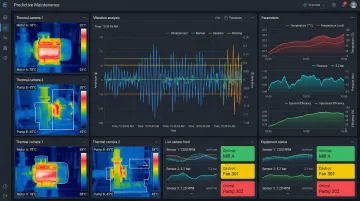
While APC optimizes current operations, AI and machine learning predict future equipment needs. These algorithms analyze historical and real-time data to detect patterns indicating equipment wear before failures occur.
This shift from reactive to predictive maintenance delivers substantial operational and financial benefits.
AI systems monitor multiple data sources:
- Vibration sensors on rotating equipment (pumps, compressors, turbines)
- Thermal imaging detecting abnormal heat patterns
- Oil analysis revealing contamination and wear particles
- Performance trends from control systems showing efficiency degradation
Shell's AI-powered predictive maintenance program monitors over 10,000 pieces of equipment, generating 15 million predictions daily. This system has reduced equipment failure incidents by 40% and maintenance costs by 20%, while YPF Argentina saved 10 days of production in 18 months by detecting impending failures in pumps and compressors.
Digital Twins and Simulation
Digital twins create virtual replicas of physical assets that integrate real-time data. These dynamic models enable simulation, optimization, and what-if analysis.
Operators can test operational changes virtually before implementing them in the field. This reduces risk and optimizes performance.
Key applications include:
- Simulating operational changes before field implementation
- Training operators on digital replicas without risking actual equipment
- Optimizing production strategies based on reservoir models
- Assessing the impact of maintenance activities on production
Shell partnered with Akselos to deploy a digital twin for a 50-year-old platform in the Southern North Sea, identifying structural reserves that enabled a 20-year life extension—avoiding the massive cost of platform replacement while maintaining safe operations.
Edge Computing and IoT Integration
Digital twins and AI systems generate massive data volumes that strain centralized processing. Network latency and bandwidth limitations can delay critical decisions.
Edge computing solves this by processing data closer to the source:
This approach delivers several advantages:
- Analyzing data at RTUs or edge gateways for immediate response
- Filtering and aggregating data before transmission, reducing bandwidth requirements
- Enabling faster decision-making for time-critical control functions
- Maintaining local intelligence when communication to central systems is lost
Industrial IoT (IIoT) sensors provide more detailed monitoring of equipment health, environmental conditions, and process variables. Integration with edge computing enables sophisticated analytics at remote sites without overwhelming communication infrastructure.
Robotics and Autonomous Systems
Robotics reduce the need for personnel in hazardous areas. These systems improve both inspection quality and frequency.
Industries deploy robotics for:
- Underwater inspection robots (ROVs) for subsea pipelines and offshore platform structures
- Aerial drones for pipeline right-of-way inspection and leak detection
- Autonomous robots for internal tank inspection, eliminating confined space entry
- Robotic systems for valve operation in hazardous areas
Chevron deploys AI-powered drones for pipeline and platform monitoring, with autonomous systems identifying gas leaks and structural issues. These systems integrate with control platforms, transmitting inspection data and enabling remote visual verification of alarms.
For companies implementing these automation technologies, experienced controls integration partners become essential. Firms like Lashley Cohen and Associates bring over 35 years of expertise in PLC programming, process control systems, and industrial networking—helping manufacturers translate these advanced concepts into operational reality.
Implementing Modern Control Solutions: Best Practices
Assessment and Planning Phase
Successful control system implementation begins with thorough assessment and strategic planning:
System Assessment:
- Inventory existing hardware and software, identifying obsolete components
- Evaluate cybersecurity posture against IEC 62443 and NIST frameworks
- Analyze communication infrastructure capacity and reliability
- Document current performance baselines for comparison
Objective Definition:
- Identify specific problems requiring solutions (safety, efficiency, compliance)
- Establish quantifiable success criteria and performance targets
- Define safety and regulatory compliance requirements
- Determine budget constraints and ROI expectations
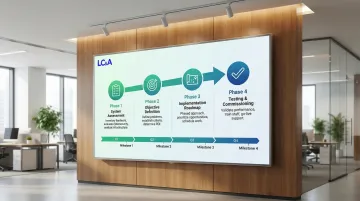
Implementation Roadmap:
- Develop phased approach minimizing operational disruption
- Prioritize high-value opportunities delivering quick wins
- Schedule work during planned turnarounds when possible
- Plan for testing and commissioning without affecting production
Selecting the Right Integration Partner
Implementation success depends on selecting an integration partner with both technical expertise and operational understanding.
Essential Credentials:
- Industry certifications such as ISO-9001 for quality management systems
- Partnerships with leading automation vendors like Rockwell Automation
- Proven project management methods ensuring on-time, on-budget delivery
- Deep experience across diverse industrial sectors and applications
Lashley Cohen and Associates brings 35+ years of industrial automation expertise, ISO-9001 certified processes, and Rockwell Systems Bronze Partner status.
With over 5,000 successful projects completed, their certified engineering staff understands the unique requirements of complex industrial operations across food processing, chemical manufacturing, metals production, and water treatment facilities.
Training and Change Management
New control systems require trained operators and maintenance staff to deliver their full value. Without proper training, even the most advanced technology fails to improve operations.
Training Requirements:
- System operation and HMI navigation for all operator shifts
- Alarm response procedures and emergency shutdown protocols
- Troubleshooting methods and basic maintenance procedures
- Cybersecurity awareness and access control policies
Change Management Process:
- Involve operators in design decisions to gain buy-in and leverage field experience
- Provide adequate training time before go-live, not rushed sessions
- Establish clear procedures and comprehensive documentation
- Support the transition period with experienced personnel available for questions
- Monitor performance metrics and gather feedback for continuous improvement
Frequently Asked Questions
What are process control systems in oil and gas?
Process control systems are integrated platforms that monitor and automatically regulate process variables (pressure, flow, level, temperature) to maintain safe, efficient operations across production sites, pipelines, refineries, and distribution networks.
What are some examples of industrial control systems?
Main types include SCADA systems for wide-area monitoring, DCS for complex refinery process control, PLCs for discrete control tasks, and SIS/ESD systems for emergency shutdown and critical safety functions.
What is the SCADA system in oil and gas?
SCADA (Supervisory Control and Data Acquisition) enables centralized monitoring and control of geographically dispersed assets. It collects real-time data from remote field devices, allowing operators to oversee pipelines, production sites, and facilities from central control rooms.
How do control systems improve safety in oil and gas operations?
Control systems continuously monitor critical safety parameters, trigger automatic shutdowns when dangerous conditions arise, and alert operators to abnormal conditions. Multiple protection layers ensure safe operations even when individual components fail.
What is the difference between DCS and SCADA in oil and gas?
DCS handles continuous process control in centralized facilities like refineries with complex, interrelated control loops. SCADA monitors and controls geographically dispersed assets like pipelines and remote sites where wide-area visibility is the priority.
What are the biggest challenges in modernizing oil and gas control systems?
Key challenges include integrating new technology with legacy systems without disrupting operations, managing cybersecurity risks as connectivity increases, justifying capital investment with clear ROI, and ensuring staff receive adequate training on new systems.