What types of manufacturing defects can machine vision systems detect?
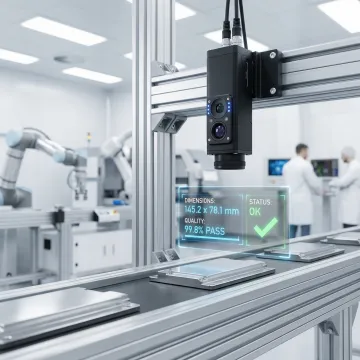
Machine vision systems can detect a wide range of defects including dimensional variations, surface scratches, cracks, discoloration, missing components, incorrect assembly, foreign material contamination, label misalignment, print quality issues, and packaging defects. Our custom-programmed systems are tailored to your specific quality criteria and can achieve detection accuracy exceeding 99.5% depending on the application.
How do vision systems integrate with existing automation and control systems?
Our vision systems seamlessly integrate with PLCs, SCADA systems, robotics, and other automation equipment through standard industrial communication protocols including Ethernet/IP, Modbus TCP, Profinet, and OPC UA. We design integration architectures that enable real-time data exchange, coordinated control, and centralized monitoring across your entire manufacturing operation.
What is the typical implementation timeline for a vision automation project?
Project timelines vary based on complexity, but most vision integration projects follow a 12-20 week cycle from initial consultation to full production deployment. This includes 2-3 weeks for application analysis, 3-4 weeks for design and specification, 4-6 weeks for programming and validation, 1-2 weeks for installation, and 2-3 weeks for commissioning and training. We provide detailed project schedules during the proposal phase.
How reliable are vision systems in challenging industrial environments?
Modern industrial vision systems are designed for harsh manufacturing environments and can operate reliably in conditions with vibration, temperature variations, dust, and ambient light changes. We specify ruggedized cameras and lighting with appropriate IP ratings, implement protective enclosures, and design systems with redundancy where critical. Our installations consistently achieve 98%+ uptime when properly maintained.
What ROI can I expect from implementing vision automation?
Most vision automation projects deliver ROI within 12-24 months through labor savings, reduced scrap and rework, improved throughput, and enhanced product quality. Specific returns vary by application, but clients typically see 30-50% reduction in quality-related costs, 20-40% increase in inspection speed, and elimination of 1-3 full-time inspection positions per system. We provide detailed ROI analysis during the feasibility study phase.
Do you provide training for our operators and maintenance personnel?
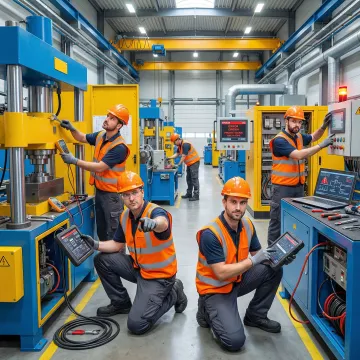
Yes, comprehensive training is included with every vision system installation. We provide hands-on operator training covering system operation, basic troubleshooting, and routine maintenance. For maintenance personnel, we offer advanced training on system diagnostics, camera calibration, lighting adjustments, and vision program modifications. All training includes detailed documentation and ongoing support resources.
Can vision systems be upgraded or modified as our production needs change?
Absolutely. We design vision systems with scalability and flexibility in mind. Vision programs can be modified to accommodate new product variants, inspection criteria changes, or process improvements. Hardware components can be upgraded or expanded to increase throughput, add inspection stations, or enhance capabilities. Our modular approach ensures your investment remains valuable as your manufacturing requirements evolve.
What ongoing support and maintenance do vision systems require?
Vision systems require minimal routine maintenance including periodic lens cleaning, lighting verification, and calibration checks. We offer comprehensive support agreements that include remote diagnostics, software updates, preventive maintenance visits, and 24/7 technical assistance. Most clients schedule semi-annual maintenance visits to ensure optimal system performance and address any emerging issues before they impact production.