What is industrial networking and why do manufacturers need it?
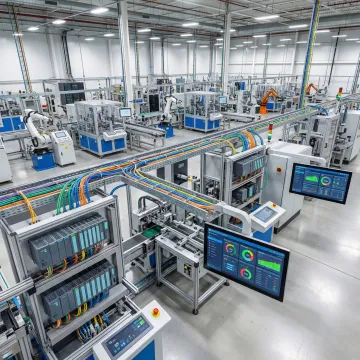
Industrial networking connects machines, sensors, PLCs, and control systems to enable real-time data exchange, centralized monitoring, and coordinated control across your manufacturing facility. It's essential for modern manufacturers because it provides visibility into operations, enables predictive maintenance, improves response times, and supports data-driven decision-making that optimizes production efficiency and quality.
How secure are industrial networks from cyber threats?
When properly designed and maintained, industrial networks can be highly secure. We implement multiple layers of protection including network segmentation, firewalls, intrusion detection systems, and secure remote access protocols. Our ISO-9001 certified processes ensure comprehensive security assessments, regular vulnerability testing, and continuous monitoring to protect your manufacturing systems from unauthorized access and cyber threats.
Can you integrate industrial networks with our existing equipment?
Yes, we specialize in integrating industrial networks with both legacy and modern equipment. Our team has extensive experience connecting diverse systems—from older PLCs and proprietary protocols to the latest IoT devices and cloud platforms. We design network solutions that bridge these technologies, ensuring seamless communication while maintaining reliability and security across your entire facility.
What industries do you serve in North Carolina?
We serve diverse manufacturing sectors across North Carolina including food and beverage, pharmaceuticals, furniture manufacturing, textiles, building materials, chemicals, metals processing, and general manufacturing. Our 35+ years of experience means we understand the unique networking requirements, regulatory compliance needs, and operational challenges specific to each industry.
How long does an industrial network implementation typically take?
Implementation timelines vary based on facility size, complexity, and existing infrastructure. A typical project ranges from 4-12 weeks, including assessment, design, equipment procurement, installation, testing, and commissioning. We work closely with your team to minimize disruption to ongoing operations, often scheduling installation during planned maintenance windows or executing phased implementations that maintain production continuity.
What ongoing maintenance and support do you provide?
We offer comprehensive maintenance and support packages including regular network health assessments, firmware updates, security patches, performance monitoring, and troubleshooting support. Our team provides both scheduled preventive maintenance and rapid response services to address issues quickly. We also offer training for your staff to ensure they can effectively operate and monitor the network infrastructure.
How do you ensure minimal downtime during network upgrades?
We use proven methodologies to minimize production impact including thorough pre-planning, detailed testing protocols, redundant system design, and phased implementation strategies. Our ISO-9001 certified processes ensure comprehensive risk assessments and contingency planning. We typically schedule critical work during maintenance windows and utilize temporary connections to maintain operations during transitions.
What are the costs associated with industrial networking services?
Costs vary based on facility size, network complexity, equipment requirements, and service scope. Factors include the number of devices to connect, distance coverage, security requirements, and integration complexity. We provide detailed assessments and transparent quotes that outline all costs including equipment, installation, programming, testing, and training. Many clients find that improved efficiency and reduced downtime quickly offset the initial investment.